Understanding water use in school buildings
Meter records help a school understand consumption and investigate unexplained changes when they are read alongside occupancy, equipment schedules and the site’s water-safety plan.
Updated . Published .
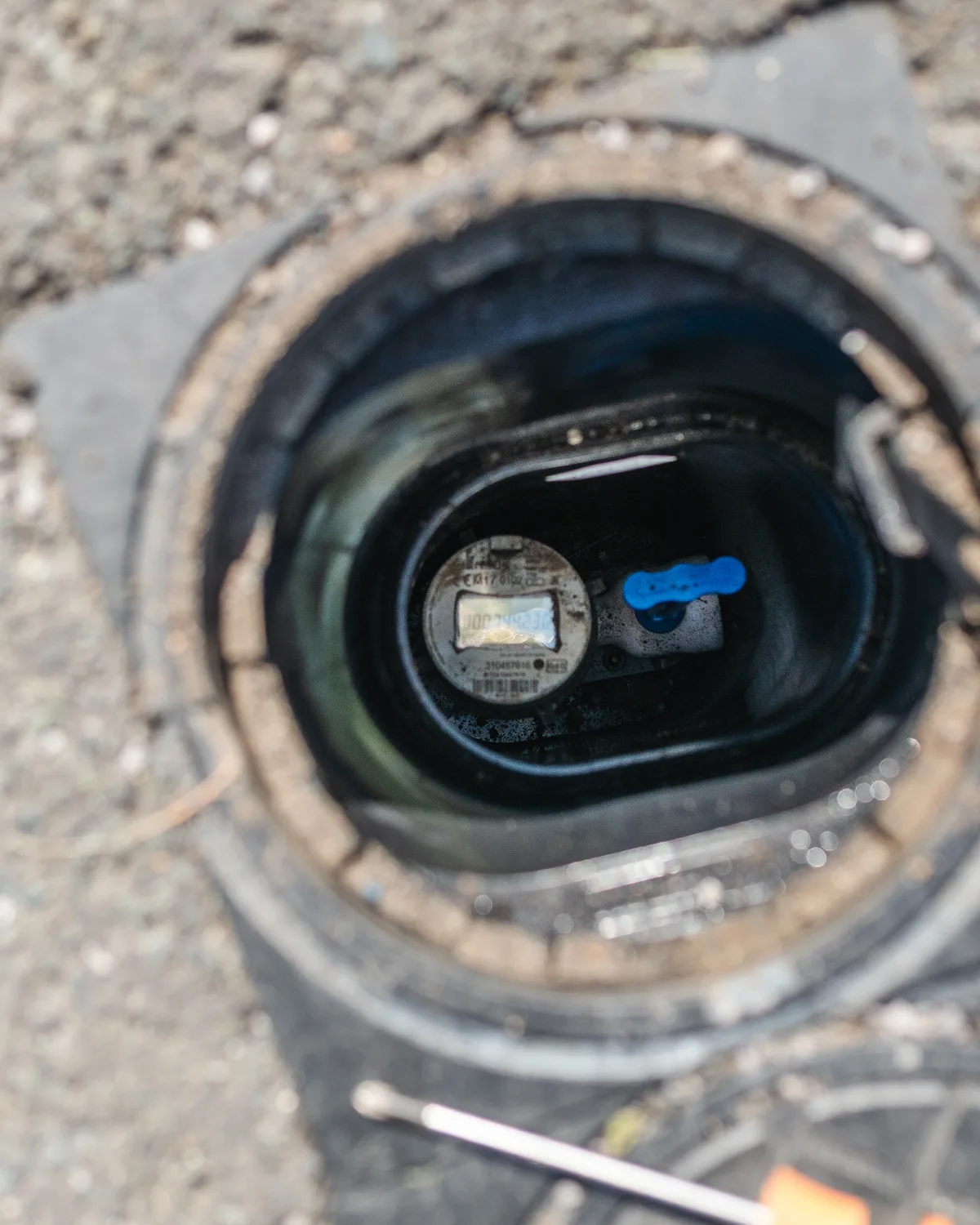
Understand what the meter serves
Identify the buildings, facilities and any accommodation supplied through the meter. Establish whether there are other meters, storage tanks or alternative supplies. A school’s operating hours alone do not explain all water use.
Start with reliable readings and a diary of activities. Note occupied periods, irrigation, cleaning, pool top-ups and water-treatment cycles. Keep required hygiene and water-safety activities in place while monitoring.
Choose the measurement that answers the question
Use bills to reconcile charged volumes and rates, manual readings to compare periods, and interval data where finer timing is useful. A pair of readings gives total use between those times; dividing by elapsed time gives an average, not an instantaneous flow.
Read meters only where access is safe. If water is creating an immediate hazard, follow the school’s emergency arrangements rather than delaying action to obtain a longer record.
Compare, investigate and review
The articles below cover holiday and weekend checks, night flow, bills, benchmarks and baselines. Use them as practical recording methods. Compare similar conditions, investigate unexplained demand and record what was found. Following a repair, compare further readings under similar conditions; a reduced total alone may have more than one explanation.
Water use and meter data guides
Holiday water checks: the August test
Comparing meter readings during a quiet holiday period can reveal unexplained consumption, provided legitimate water use is recorded alongside the readings.
Night flow analysis on a school meter
Overnight readings help identify unexplained water use. They are evidence for investigation, not proof that every litre passing the meter is leakage.
Weekend water checks for schools
A weekend reading can help a school spot changes in water use between term-time checks, after allowing for weekend activities and equipment schedules.
Using water consumption benchmarks in schools
Water use per pupil can support comparisons between similar schools, but differences in facilities and use mean it cannot diagnose a leak on its own.
Reading a school water bill
A school water bill should be checked against the correct meter, reading dates and tariff before an increase is attributed to leakage.
Automatic meter reading and interval data
Automatic meter reading can make changes in consumption easier to see, provided compatible equipment, reliable data and a process for reviewing alerts are in place.
Running a water audit on a school site
A school water audit combines records and safe inspections to identify unexplained use, visible faults and opportunities for improvement.
Setting a water-use baseline for your school
A useful baseline records measured consumption under defined operating conditions, so later changes can be compared on a consistent basis.
Understanding a school water-use profile
There is no single normal water-use profile for every school; interpret the pattern against the facilities, activities and equipment served by the meter.
Water use and meter data: common questions
Should a closed school use no water?
Some genuine no-use periods may register zero. Other closures include equipment cycles, accommodation or planned flushing. Identify those uses before interpreting the reading.
Can consumption figures locate a leak?
They can help identify the affected supply and timing. Locating a fault normally requires additional inspection, controlled isolation or suitable detection methods.
Sources for this page
- Source: Water Plus, Your water audit guide (opens in a new tab) ().
- Source: Waterwise, School Water Efficiency Audit (opens in a new tab) ().
- Source: Health and Safety Executive, HSG274 Part 2: control of legionella in hot and cold water systems (opens in a new tab) ().
Last reviewed . How this site sources and dates its figures.