SCHOOL LEAK DETECTION
Water meters and night flow analysis on school sites
Use meter readings to understand how much water is being lost, and when.
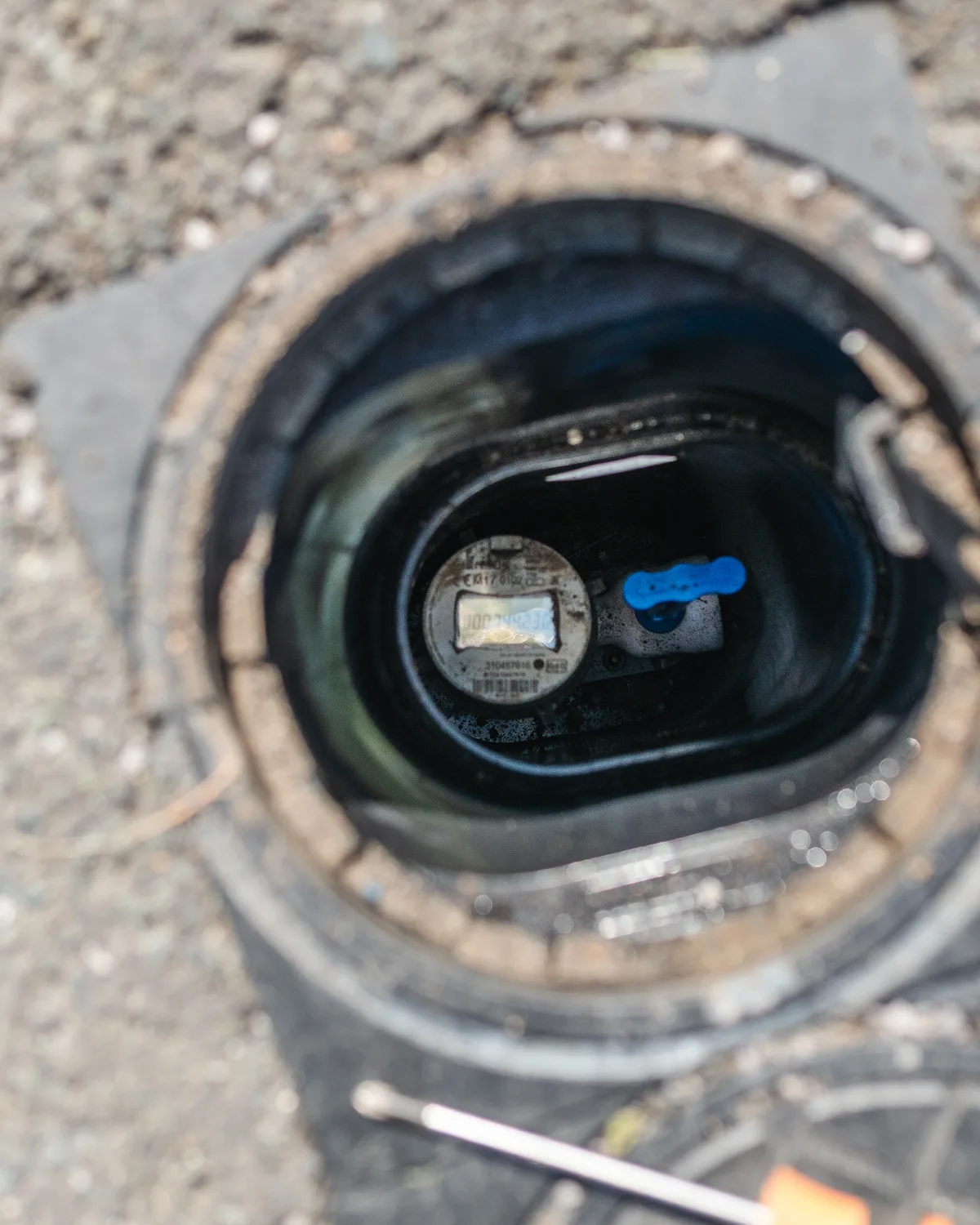
Night flow analysis compares a school's overnight minimum consumption against what the site should use when closed, and any persistent difference is a leak.
WHAT TO LOOK FOR
Leak symptoms and common faults
- Overnight minimum flow that never reaches zero on a day school
- The clearest single indicator of a leak available to any school
- Consumption that does not fall during the summer holiday
- A loss that is running independently of occupancy
- A step change in daily consumption on a specific date
- A pipe or fitting that failed suddenly, datable from the data
- Sub-meters recorded against the wrong building after a refurbishment
- Sub-meter totals that do not reconcile with the incoming meter
- A stopped or under-registering meter
- Consumption that looks impossibly low or flat
What night flow analysis measures
Between about 1am and 5am a closed school should draw almost nothing. Any water passing the meter in that window is going somewhere nobody asked it to go. That is the whole method, and its power comes from the fact that a school's occupancy pattern is unusually clean compared with almost any other building type.
The output is a rate, in litres per minute or per hour, which converts directly into an annual volume and an annual cost. That number is what turns a suspicion into a business case.
Overnight consumption at a school meter across one week. The healthy site returns to zero every night. The leaking site holds a constant floor, and the height of that floor is the leak rate.
Taking a night flow reading without any special equipment
- Confirm nothing is scheduled to run overnight: irrigation, a cleaning machine, a pressurisation unit topping up
- Read the meter at the end of the day and photograph it, including the small dials
- Read it again first thing before anyone arrives, and photograph it again
- Subtract, divide by the hours between readings, and you have a rate
- Repeat on a second night to confirm it is consistent rather than a one-off
The photograph matters. A written-down reading is disputable; a timestamped photograph of the dial is not, and it is what an insurer, a wholesaler or a funder will want.
AMR, half-hourly data and what to ask your retailer for
An automatic meter reading device on the meter logs consumption at intervals and reports it, which turns the manual exercise above into a chart you can look at any morning. Many schools already have one fitted and have never seen the data.
In the English non-household market the retailer holds the relationship and the data. Ask them, by name, for interval consumption data for your supply point over the last twelve months. If there is no logger fitted, ask what it would cost to fit one; on a site with any history of losses it usually pays for itself the first time it catches something.
Sub-metering a site so the next leak is found in a day
On a large site, a single incoming meter tells you that you have a leak and nothing about where. Sub-meters on each block, or at least on the branches serving the sports facilities, the kitchen and any detached buildings, reduce the search from a campus to a building.
The step almost everyone skips is writing down what each sub-meter actually serves and keeping that record current through refurbishments. A sub-meter with no schedule is a number nobody can act on.
Arrange a school leak detection survey
School leak survey questions
Our overnight reading is not zero but it is small. Should we worry?
Work out what it is per year before deciding. A flow that looks trivial per minute becomes a large volume over 8,760 hours, and it is billed twice on most school accounts because wastewater is charged on the same volume. Convert it before you dismiss it.
Who do we ask for our water data?
Your retailer, which is the company that sends your bill, rather than the wholesaler that owns the pipes. Ask specifically for interval or half-hourly consumption data for your supply point identification number over the last twelve months.
Is it worth sub-metering our site?
On a single-building primary, rarely. On a secondary, a college or any site with detached buildings, almost always, because it converts a whole-site search into a single-building one and it keeps working every year after it is installed.
Sources for this page
- Source: MOSL, MOSL, the market operator for the non-household water retail market in England (opens in a new tab) ().
- Source: Department for Education, Good estate management for schools (opens in a new tab) ().
Last reviewed . How this site sources and dates its figures.