DETECTION METHOD
Pressure testing school pipework for leaks
Test isolated sections to establish which part of a system is losing pressure.
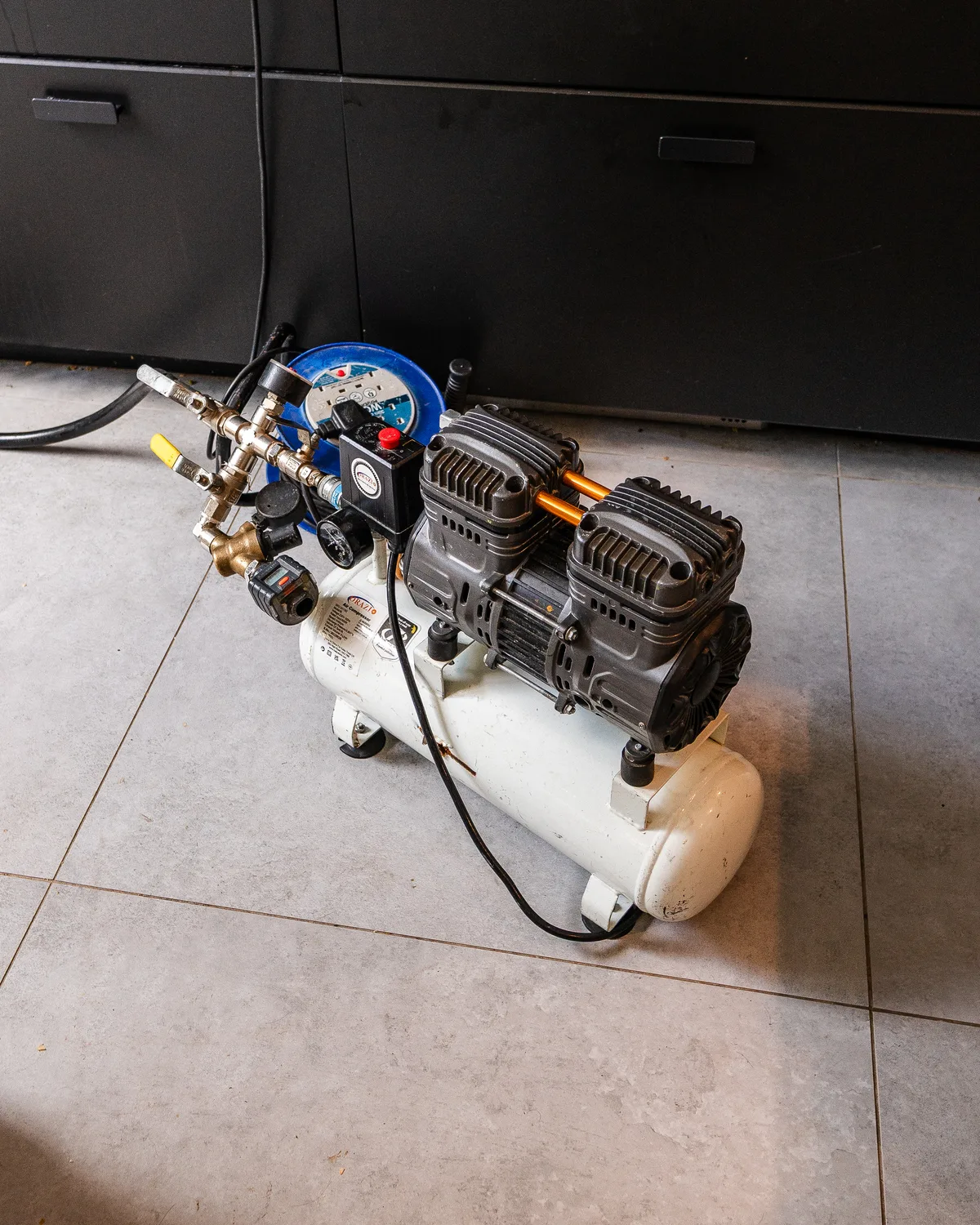
Pressure testing isolates a section, holds it at a known pressure and measures the fall, which proves whether it leaks and how fast before any search begins.
- What it detects
- Whether a defined section is losing water, and at what rate
- Invasiveness
- Non-invasive, needs access to the pipe
- Works through
- Not applicable; it tests the pipe rather than looking through anything
- Constraint on a school site
- The section must be isolated, so it needs a window when that branch can be off supply or off heat
- When it is used
- The first step on any heating circuit, pool line or suspect branch
What a pressure test establishes
The section is isolated at both ends, brought to a known pressure, and watched. A sound section holds. A section with a defect falls, and the rate of fall indicates the size of the defect.
That produces two things a school needs before spending anything else: certainty that there is a leak, and a number describing it. Without them, every subsequent search is speculative and every quote is a guess.
Pressure testing a school heating circuit
On a sealed heating system the test is usually done zone by zone from the manifold or the plant room, which does two jobs at once: it proves the loss and identifies which zone owns it.
Two things have to be ruled out first, because both mimic a leak. A failed expansion vessel makes pressure swing with temperature rather than fall steadily. A passing pressure relief valve loses water to the tundish, which is a genuine loss but not a pipe defect.
What it means on a school site specifically
The constraint is isolation, and on a school site the practical obstacle is usually a valve that has not been operated in fifteen years. Exercising the valves before the test day is the single most useful preparation a site manager can do.
Testing a heating circuit means that zone is off, so it is scheduled for a warm period or a holiday rather than a cold Monday in January.
What the test needs from the school
- Working isolation valves at both ends of the section, exercised beforehand
- A drain-off point and a fill point on the section
- Agreement on how long that zone or branch can be out of service
- The system's own pressure gauge readings and top-up history, if anyone has recorded them
Questions schools ask
Will a pressure test tell you where the leak is?
No, and it is not meant to. It tells you whether a defined section is leaking and how fast. Locating the point is the next step, using tracer gas, thermal imaging or acoustic methods on the section the test identified.
Can you test while the heating is on?
The section under test has to be isolated and at a controlled pressure, so that zone is off during the test. The rest of the system can usually keep running, which is why zone-by-zone testing suits an occupied school.
Our valves will not close properly. Does that stop the test?
It makes it unreliable, because a passing valve looks like a leaking pipe. Where valves cannot be relied on, the section boundary has to be established another way, or the valves replaced first. It is worth knowing this before the engineer arrives.
Sources for this page
Last reviewed . How this site sources and dates its figures.